Editorial guide
Tennis terms glossary A–Z
Love means zero, deuce is 40–40 and advantage is the next point lead in a standard game. This A–Z glossary explains scoring, shots, draw labels and statistics so that a result or commentary is easier to follow.
How should I use tennis terminology?
Read a term in context. A qualifying final is different from a main-draw final, and a match tiebreak is different from a full deciding set. Statistical labels such as unforced error depend on the source’s definitions.
Which terms can cause misleading headlines?
Walkovers are not completed matches. Retirements need their status preserved. A career-high ranking is historical, while a current ranking needs an official date. These distinctions matter more than knowing every informal nickname.
Tennis glossary A–Z
| Term | Meaning |
|---|---|
| ATP | The organization operating the principal men’s professional tour. |
| Ace | A legal serve the receiver does not touch, winning the point. |
| Advantage | The point lead immediately after deuce in an advantage game. |
| Advantage court | The left half of the court from a player’s viewpoint at the baseline. |
| Advantage set | A set requiring a two-game lead without a deciding tiebreak. |
| Alley | The strip between a singles sideline and a doubles sideline. |
| Approach shot | A shot played while moving forward toward the net. |
| Australian Open | The Grand Slam tournament held in Melbourne. |
| Backhand | A stroke played on the side opposite a player’s usual forehand. |
| Backspin | Backward rotation that affects flight and bounce. |
| Bagel | Informal term for a 6–0 set, not six pointless games. |
| Ball mark | The impression left by a bouncing ball, especially visible on clay. |
| Baseline | The back boundary line at each end of the court. |
| Baseline rally | An exchange played mainly from near the back of the court. |
| Best of five | A match format requiring three sets to win. |
| Best of three | A match format requiring two sets to win. |
| Body serve | A serve directed toward the receiver’s body to restrict the swing. |
| Break | A game won by the receiver. |
| Break back | Winning a return game after losing a service game. |
| Break point | A point on which the receiver can win the game. |
| Bye | Advancement past a draw position without having to play that round. |
| Chair umpire | The official who manages the match from the umpire’s chair. |
| Challenge | A request to review a call under an adopted review procedure. |
| Challenger | An event on the ATP Challenger Tour, below the ATP Tour. |
| Changeover | A scheduled change of ends, often with a rest interval. |
| Clay court | A court with an unbound mineral top layer. |
| Code violation | An infraction handled under the applicable conduct code. |
| Crosscourt | A shot traveling diagonally across the court. |
| Dead ball | A ball no longer in play after the point ends. |
| Deciding set | The set that will determine the match winner. |
| Default | A match loss imposed under the applicable rules or code. |
| Deuce | A tied score of three points each in a standard game. |
| Deuce court | The right half of the court viewed from a player’s baseline. |
| Double fault | Two successive service faults, losing the point. |
| Doubles | A match between two teams of two players. |
| Doubles sideline | The outer side boundary used for doubles play. |
| Down the line | A shot directed roughly parallel to a sideline. |
| Draw | The bracket specifying positions and routes through an event. |
| Drop shot | A short shot intended to land close beyond the net. |
| Entry list | The list of players entered, distinct from the completed draw. |
| Error | A shot that loses the point; classification depends on the source. |
| Fault | An unsuccessful serve under the service rules. |
| Fifteen | The call for a player’s first point in a standard game. |
| Final | The championship match of the identified draw or section. |
| First serve | The first service attempt for a point. |
| Flat shot | A stroke with relatively little spin. |
| Follow-through | The continuation of a swing after contact. |
| Foot fault | A breach of the server’s foot-position requirements during service. |
| Forced error | An error attributed to pressure from the opponent, using the source’s definition. |
| Forehand | A stroke normally played on the dominant-hand side. |
| Forty | The call for a player’s third point in a standard game. |
| Game | A scoring unit made up of points. |
| Game point | A point that can win the game for the leading player. |
| Grand Slam | One of tennis’s four major tournaments; also used for winning all four in a calendar year. |
| Grass court | A court with a grass playing surface. |
| Grip | How the hand holds the racket handle. |
| Groundstroke | A stroke played after the ball has bounced. |
| Half-volley | A shot struck just after the bounce. |
| Hard court | A court with a bound surface system, whose pace can vary. |
| Head-to-head | The record between two players within a defined competition scope. |
| Hold | Winning a service game. |
| ITF | The International Tennis Federation, tennis’s international governing body. |
| Indoor | Played under a roof; it does not specify the court surface. |
| Inside-in | A forehand from the backhand side directed down the line. |
| Inside-out | A forehand from the backhand side directed diagonally. |
| Junior | A player or competition in an age-restricted youth circuit. |
| Kick serve | A serve using spin to produce a pronounced bounce. |
| Let | A call requiring the relevant serve or point to be replayed under the rules. |
| Line judge | An official assigned to make calls on designated lines. |
| Lob | A high shot intended to pass over an opponent near the net. |
| Love | Zero points in a tennis score. |
| Love game | A game won without conceding a point. |
| Lucky loser | An eligible qualifying loser admitted to an available main-draw position under entry rules. |
| Main draw | The principal draw, distinct from qualifying. |
| Match point | A point on which a player can win the match. |
| Match tiebreak | A tiebreak used instead of a deciding set in an adopted format. |
| Mini-break | Informal term for winning a point on the opponent’s serve in a tiebreak. |
| Mixed doubles | Doubles played by teams each comprising a man and a woman. |
| Net cord | The cord or band area at the top of the net, often discussed after contact. |
| Net point | A point classified by a statistics source as played at the net. |
| No-ad | A game format using a deciding point at deuce. |
| Not before | An earliest scheduled start time, not a guarantee of an exact start. |
| Order of play | The organizer’s schedule of matches and court assignments. |
| Overhead | A stroke played above the head, often a smash. |
| Passing shot | A shot played past an opponent positioned near the net. |
| Point | The smallest scoring unit in a match. |
| Protected ranking | An entry provision following qualifying absence; it is not necessarily a current rank. |
| Qualifier | A player who earned a main-draw place through qualifying. |
| Qualifying | A preliminary draw used to determine some main-draw entrants. |
| Quarterfinal | A round ordinarily reducing eight remaining entrants to four. |
| Racket | The stringed implement used to strike the ball. |
| Rally | The sequence of shots during a point after service begins play. |
| Ranking | A dated ordering calculated under a circuit’s eligible-results rules. |
| Receiver | The player returning serve for that point. |
| Retirement | A player stopping a match after it has begun. |
| Return | The shot used to respond to a serve. |
| Round robin | A format where group members play one another before qualification is decided. |
| Second serve | The service attempt allowed after a first-service fault. |
| Seed | An entrant assigned a draw position under seeding rules. |
| Semifinal | The round determining the finalists of a draw. |
| Serve | The stroke that starts a point. |
| Serve and volley | A pattern of following the serve forward toward the net. |
| Service box | The area into which a legal serve must land. |
| Service line | The line forming the back boundary of a service box. |
| Set | A scoring unit composed of games or an adopted alternative format. |
| Set point | A point on which a player can win the set. |
| Singles | A match between two players. |
| Singles sideline | The side boundary used in singles. |
| Slice | A stroke typically imparting backspin or sidespin. |
| Smash | An attacking overhead stroke. |
| Straight sets | A match won without losing a set. |
| String bed | The interlaced strings within the racket frame. |
| Super tiebreak | Common informal name for a ten-point tiebreak; verify the adopted format. |
| Sweet spot | The effective central hitting area of a racket’s strings. |
| Thirty | The call for a player’s second point in a standard game. |
| Tiebreak | A numbered-point game requiring the specified target and a two-point lead. |
| Topspin | Forward rotation that affects a ball’s flight and bounce. |
| Tour | An organized circuit of tournaments. |
| Unforced error | A judgment-based error category whose criteria depend on the statistics source. |
| Volley | A stroke played before the ball bounces. |
| WTA | The organization operating the principal women’s professional tour. |
| Walkover | Advancement when an opponent does not start the match; not a played victory. |
| Wildcard | A discretionary entry awarded under the event’s entry rules. |
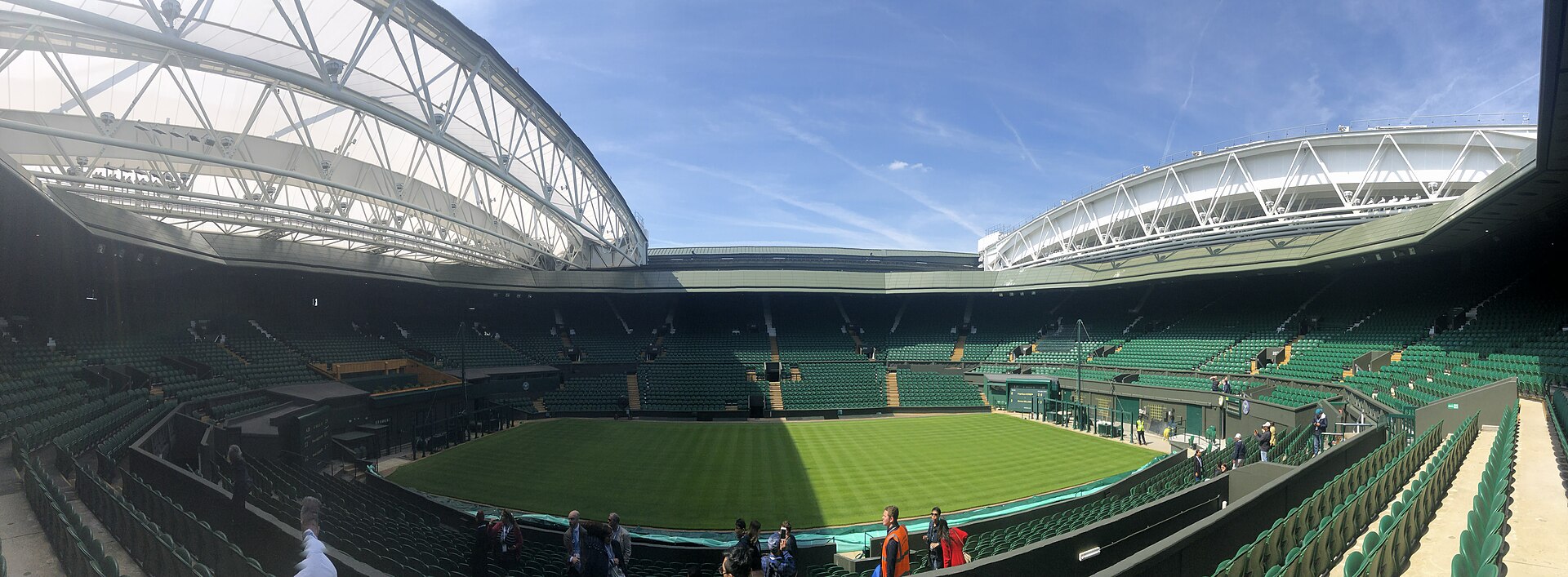
| Wimbledon | The grass-court Grand Slam tournament in London. |
| Winner | A shot winning the point without an opponent’s successful return; statistical conventions vary. |
Frequently asked questions
Does love mean a bad score?
It simply means zero points.
Are all glossary terms formal rules?
No. Some, such as bagel and mini-break, are informal commentary terms.
Does a winner count include aces?
Check the statistics source; categories and presentation can differ.
Sources and scope
Official references used for this edition. Dates and records reflect the stated cutoff; schedules and rules can change. Examples labeled hypothetical are illustrations, not match results.